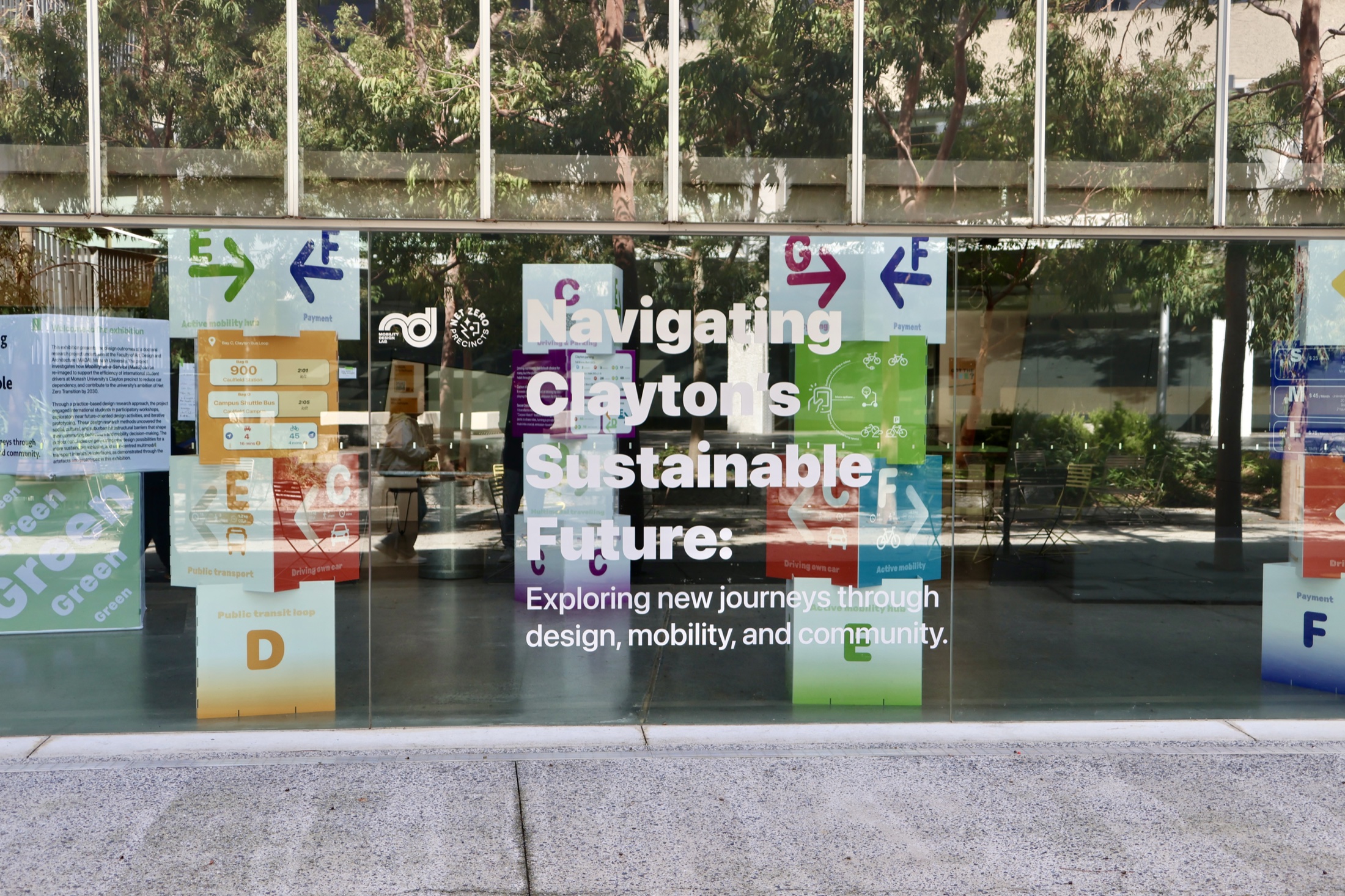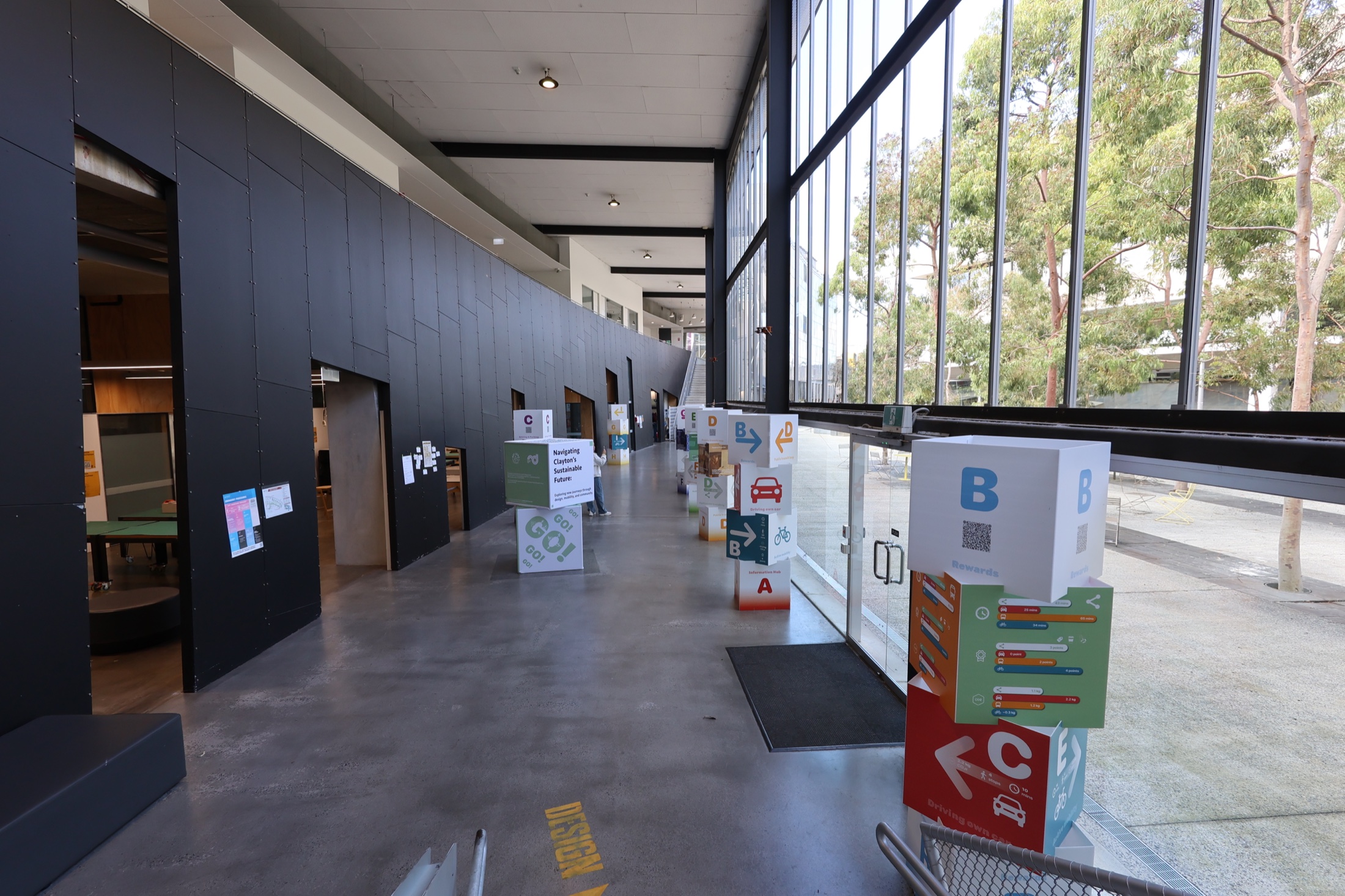
Make a low-carbon commute feel like the workable choice.
Sustainable transport options existed around Monash University’s Clayton campus, but using them often demanded extra time, fragmented knowledge and confidence at each transfer.
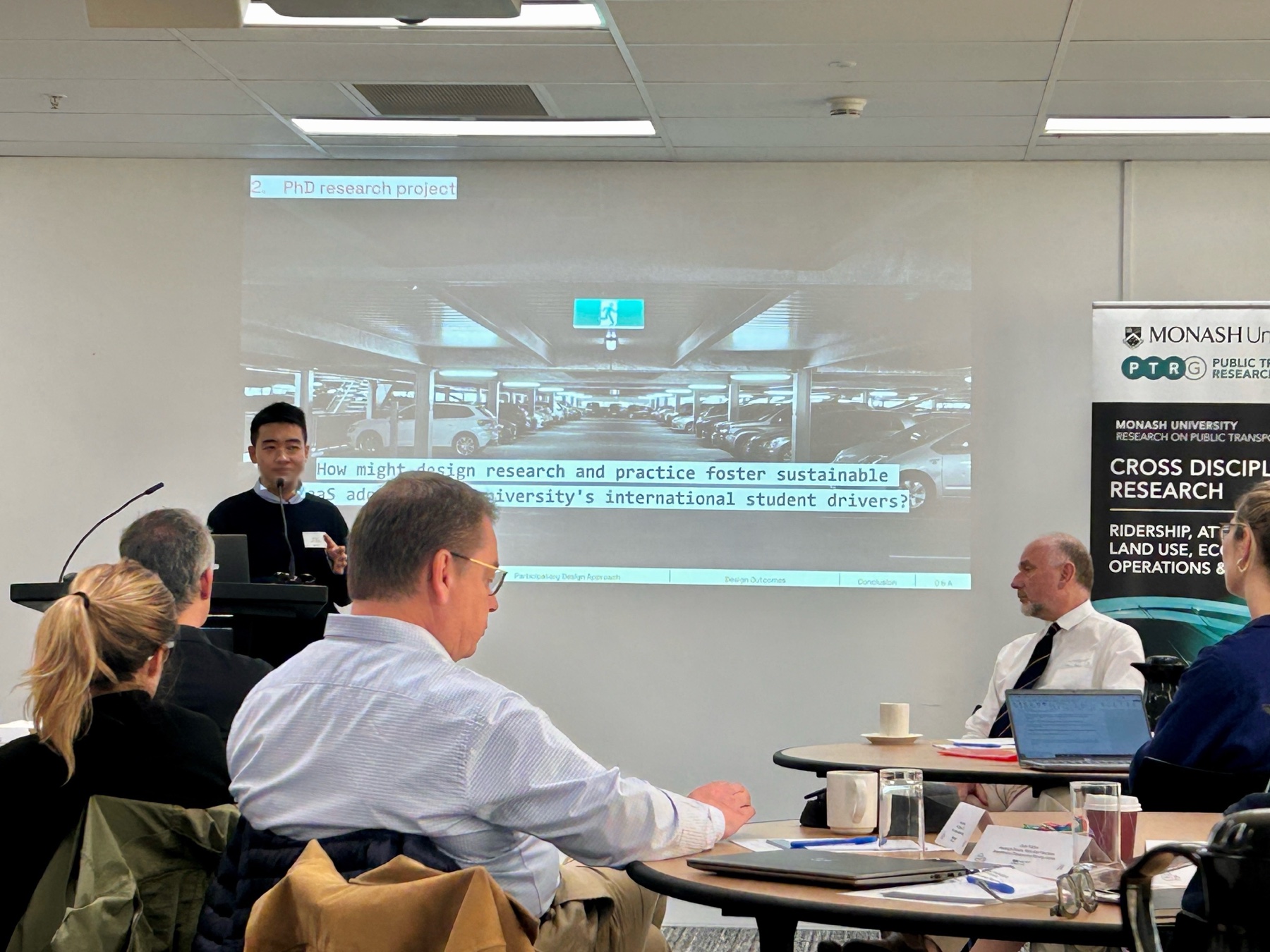
The project asked how a campus-embedded digital platform could help international student drivers make more sustainable travel decisions without ignoring the realities of suburban infrastructure and busy routines.
- Role
- Lead researcher & designer
- Context
- Practice-based PhD, Monash Net Zero Precinct
- Methods
- Ethnography, co-design, interviews, prototyping, service blueprinting
- Scope
- Early-stage research concept, not a deployed product
Research question
How can participatory design with international student drivers inform the interface and service requirements of a campus-based MaaS proposition that supports sustainable commuting decisions?
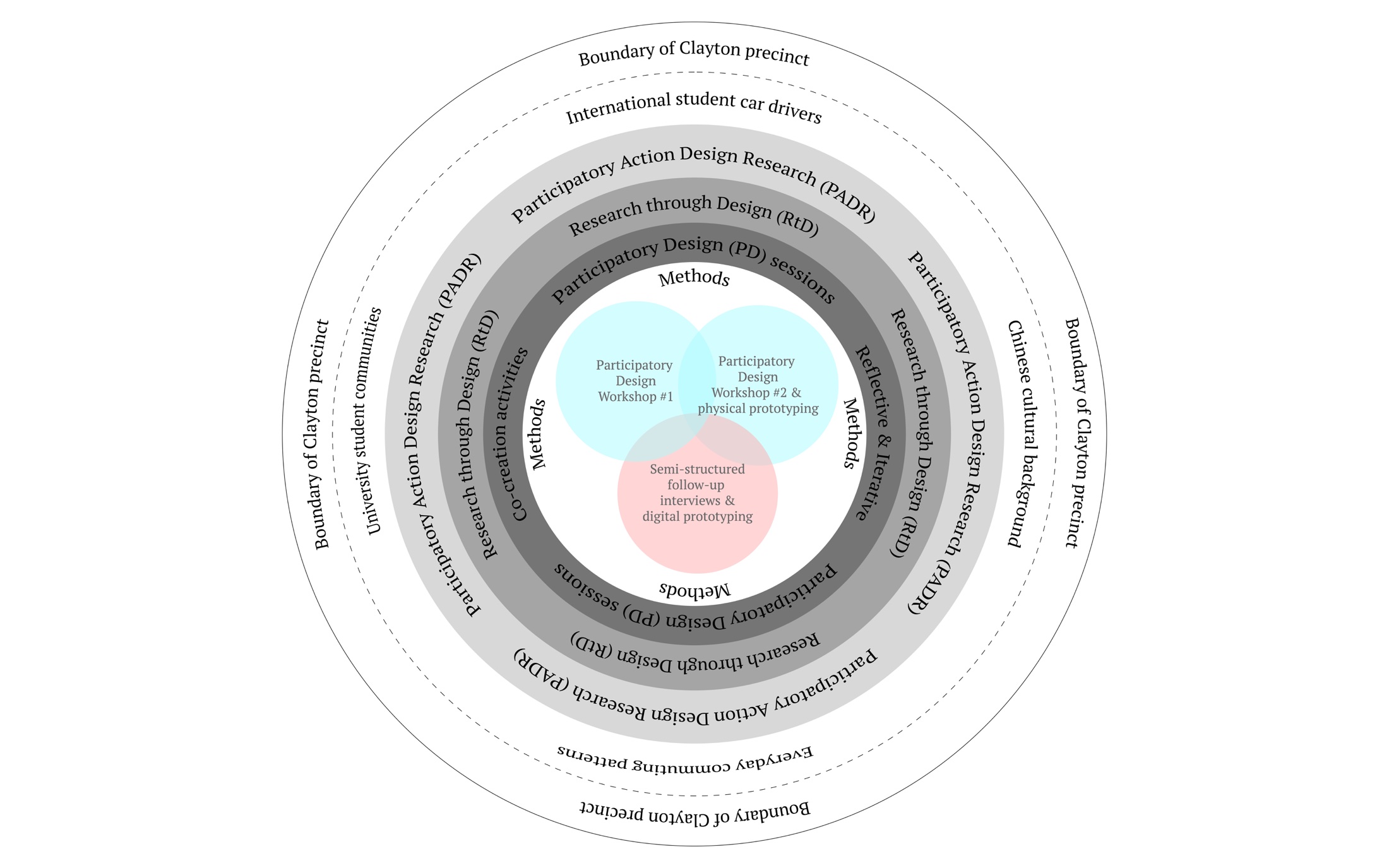
Clayton as a bounded mobility ecosystem
A suburban campus where parking, shuttle services, information channels and first- and last-mile conditions intersect.
International students in a window of change
Ten student drivers whose newly forming local travel habits made everyday barriers and opportunities especially visible.
A plausible five-year proposition
The study focused on services and technologies that could reasonably be deployed, rather than a speculative distant future.
Participatory workshop sequence
From lived commutes to shared design decisions.
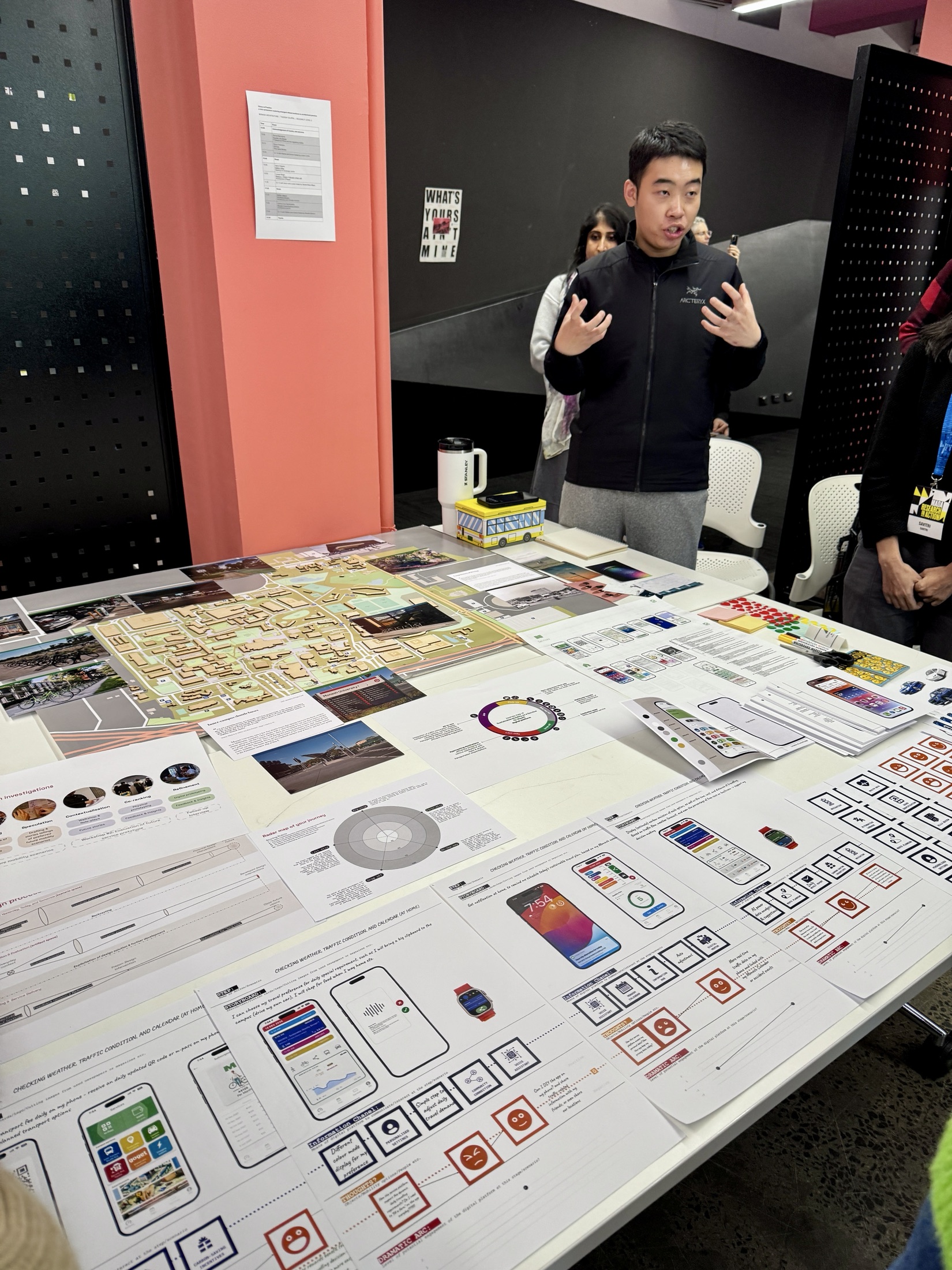
Two participatory design workshops with ten international student drivers moved from personal travel experience to tangible service and interface propositions. Follow-up interviews then tested the meaning behind the workshop artefacts and clarified emerging requirements.
- 02
- Participatory workshops
- 10
- Student driver participants
- 01
- Follow-up interview round
Map the lived commute
Radar maps and a detective wall helped participants surface routines, barriers, decision points and local mobility knowledge.
Make alternatives tangible
Postcards and speculation sheets opened discussion about preferred futures without asking participants to speak in design jargon.
Sequence the service
Printed interface cards were physically arranged into journeys, making missing steps, context and information needs visible.
Critique and prioritise
Contextualised testing, co-ranking and voting dots turned individual reactions into collective priorities for the next prototype.
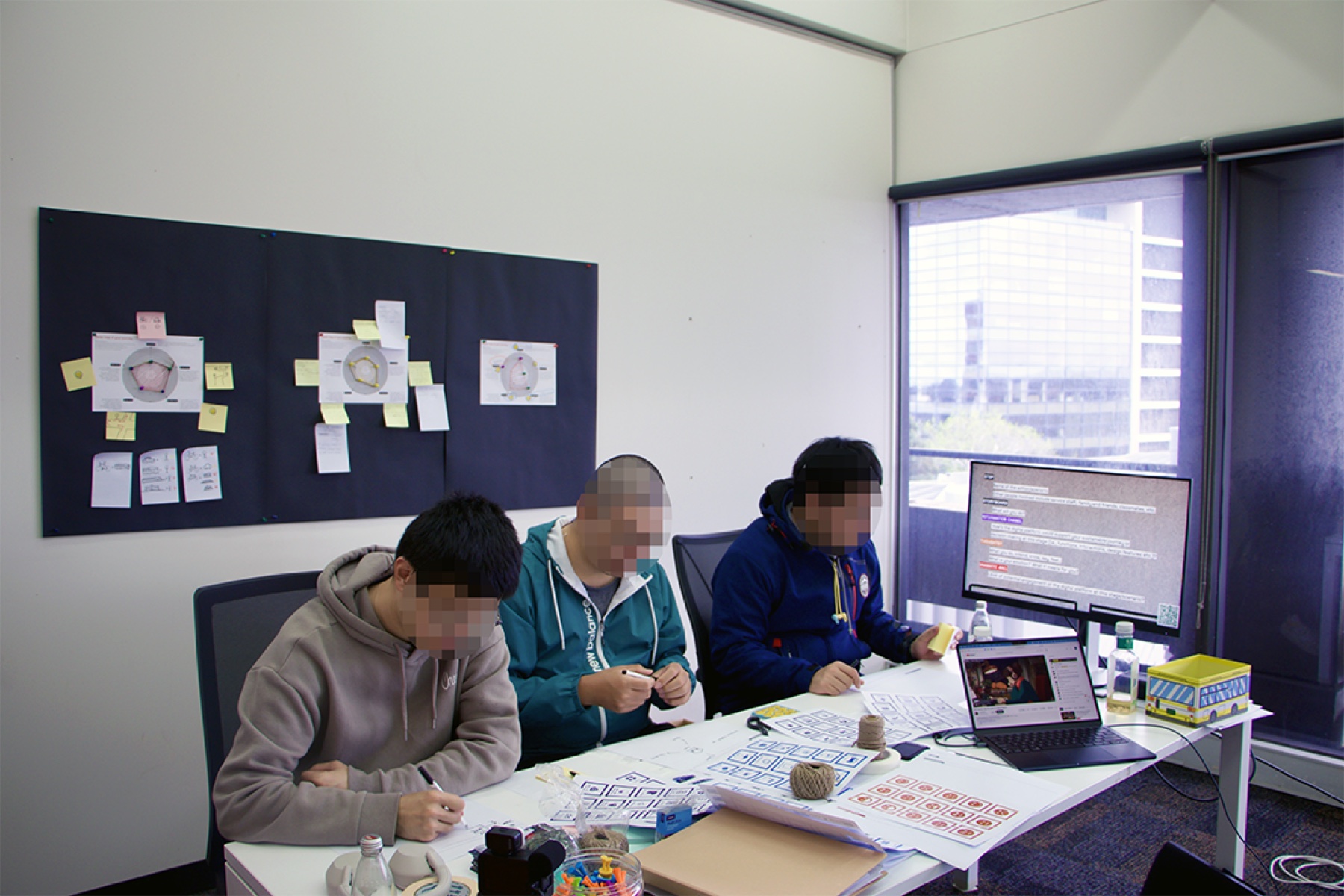
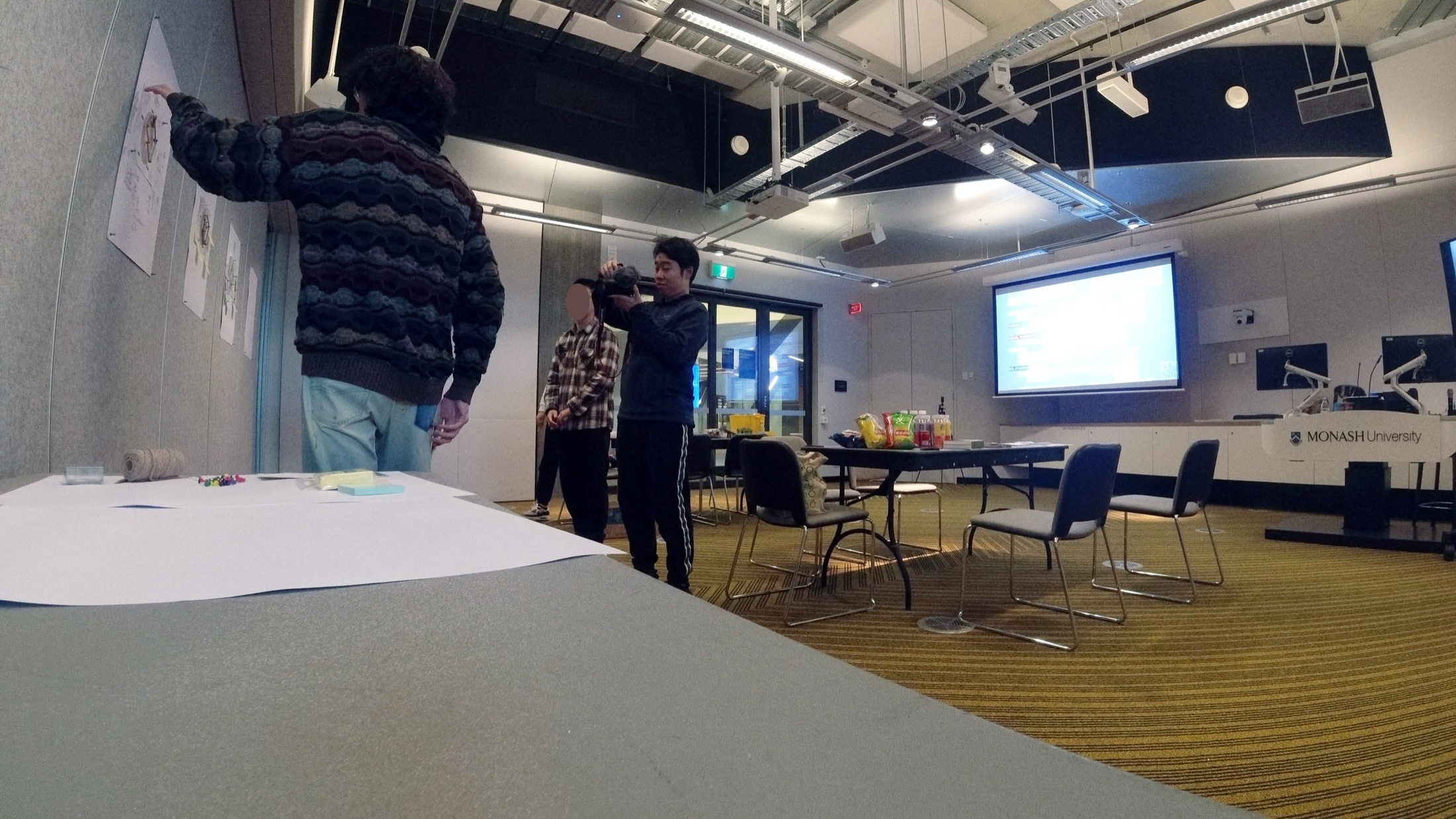
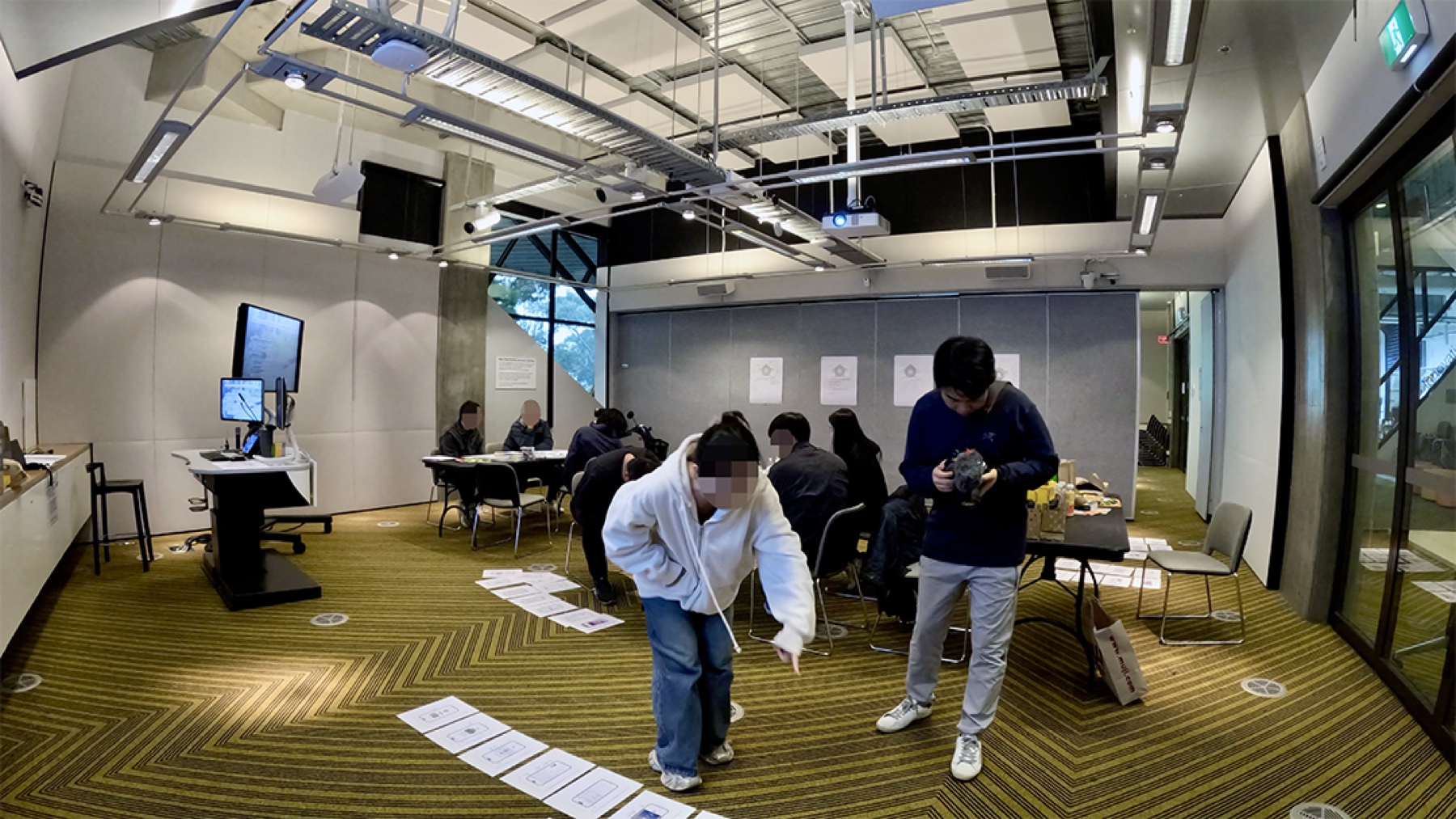
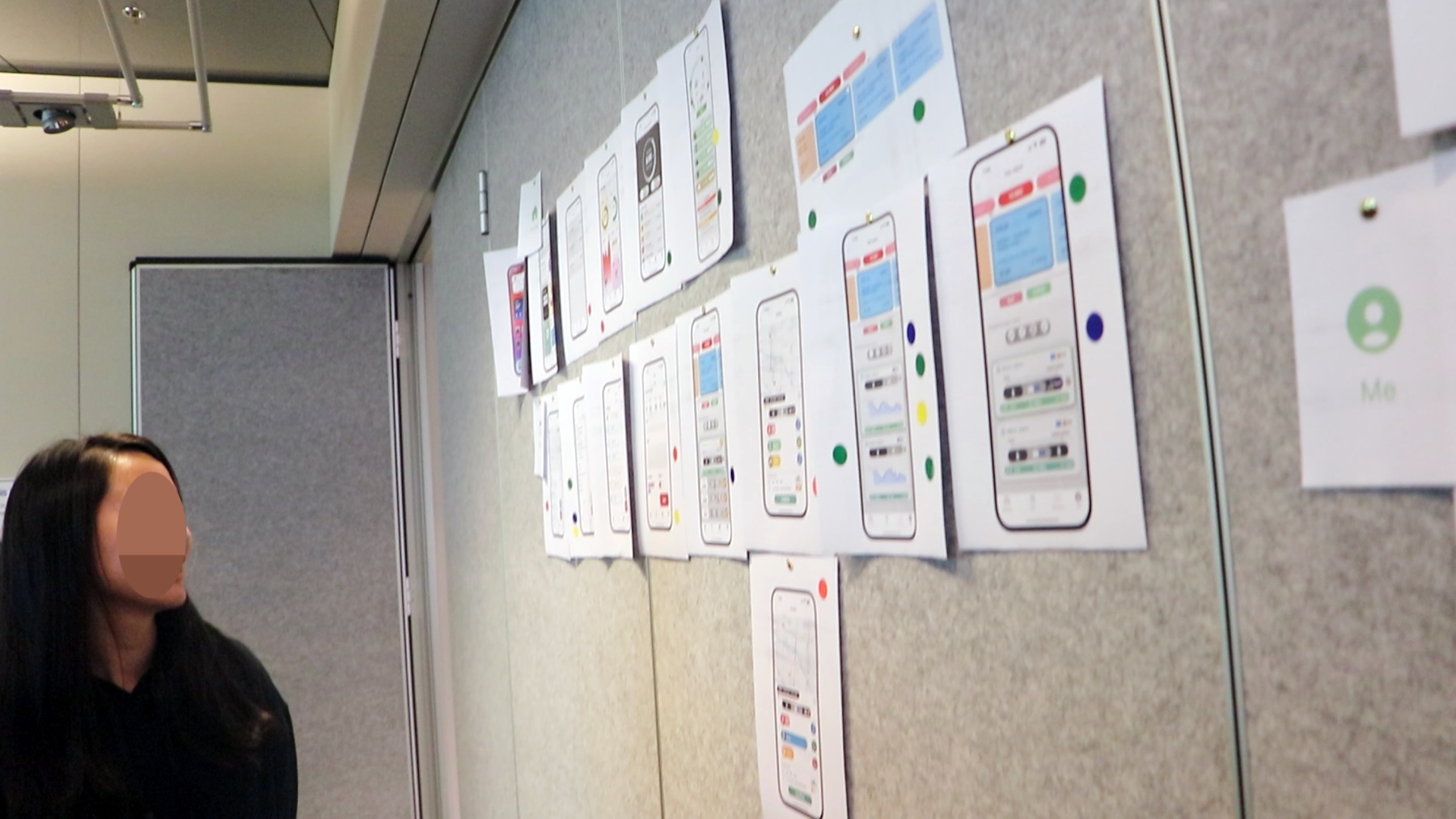
Materials in the room
- Radar maps
- Detective wall
- Postcards
- Speculation sheets
- Printed interface cards
- Voting dots
- Interview guide
Research output Travel friction → participant priorities → interface and service requirements
What the research reframed
Mode choice was not a motivation problem alone. It was an experience made difficult by time, infrastructure and uncertainty.
Sustainability loses to urgency
Time, cost, comfort and tight study schedules routinely outweigh environmental intent.
Information is fragmented
Planning a multimodal trip means stitching together services, timetables and local knowledge.
Confidence shapes choice
Safety concerns and unfamiliar transfer points make walking, cycling and public transport feel risky.
Impact feels abstract
People need immediate, contextual feedback, not distant sustainability messaging, to see progress.
People moved from participants to co-designers.
Two participatory workshops, follow-up interviews and iterative prototypes with ten international students connected lived commuting routines to interface decisions. The prototype became a thinking tool: something participants could question, rearrange and make more realistic.
- Discover the context
Map services, campus paths, infrastructure and everyday travel patterns.
- Co-frame the friction
Surface decision moments, stress, trade-offs and desired future scenarios.
- Make to learn
Use design cards, physical flows and digital prototypes to elicit feedback.
- Translate into a system
Connect interface patterns to a five-stage service experience.
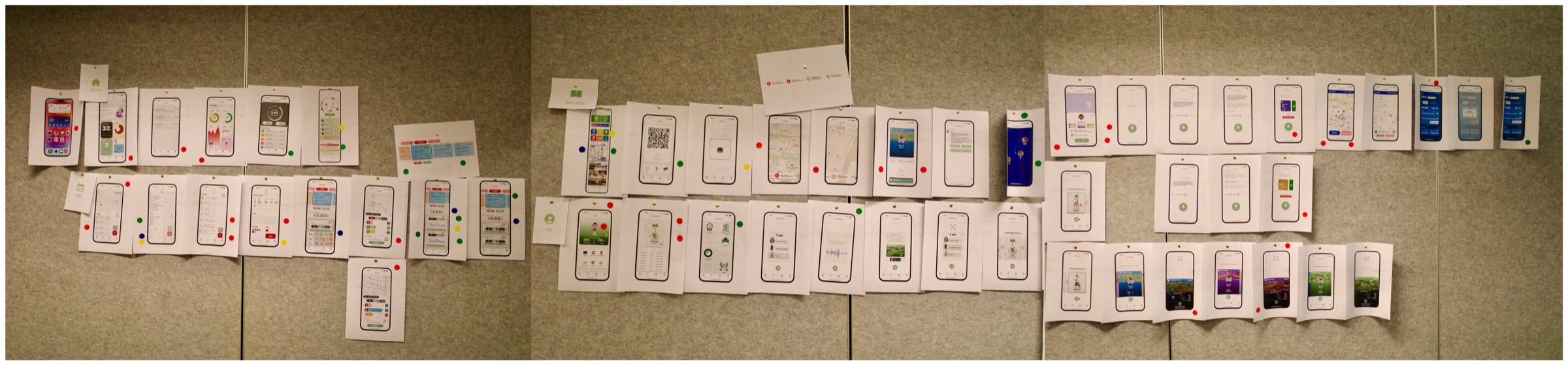
What participant scrutiny changed
The research did not treat every persuasive-design idea as equally valid. Participant objections reshaped the proposition.
Strongest support
Campus value, not cash
Withdrawable cash rewards were rejected. Participants preferred points redeemable against campus services and transport costs.
Qualified support
Progress, not novelty
Progress indicators and recognition stayed; challenges and badges were treated cautiously because their novelty may fade.
Least support
Peer knowledge, not assumed trust
Informal route knowledge mattered, but the study found no evidence that an in-app social layer could reproduce existing friendship trust.
One decision-support layer across the entire journey.
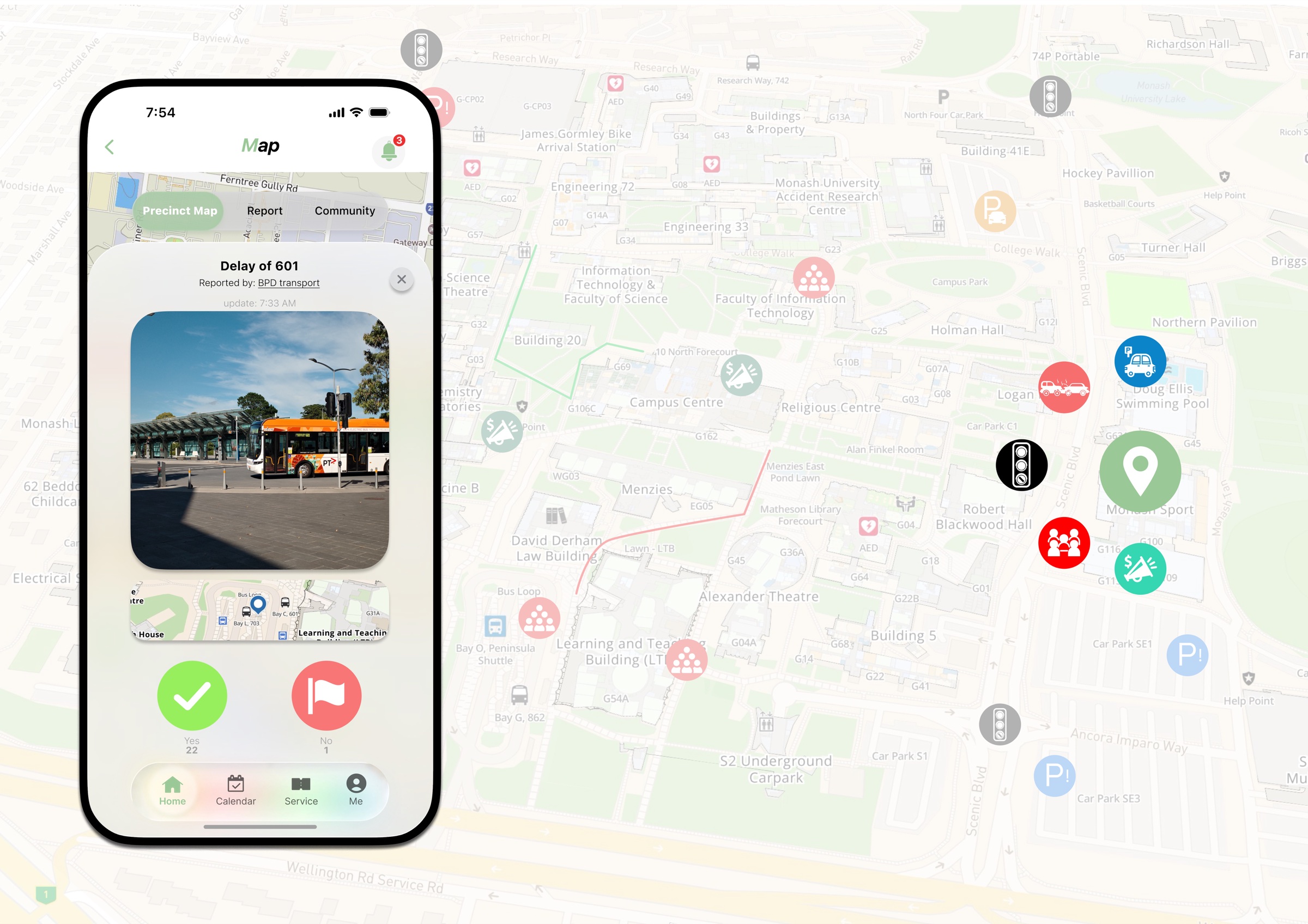
Go Green! Monash connects planning, live services, personalised feedback and campus rewards across four product areas, turning sustainable intent into prompts that arrive at the moment of choice.
Interactive Figma prototype. Move through the designed response.
Explore the interface flows directly, from personalised planning and multimodal comparison to mobility services, rewards and the wider Clayton precinct experience.
Open full prototype in FigmaClick or tap inside the preview to explore. If it does not load, open it directly in Figma.
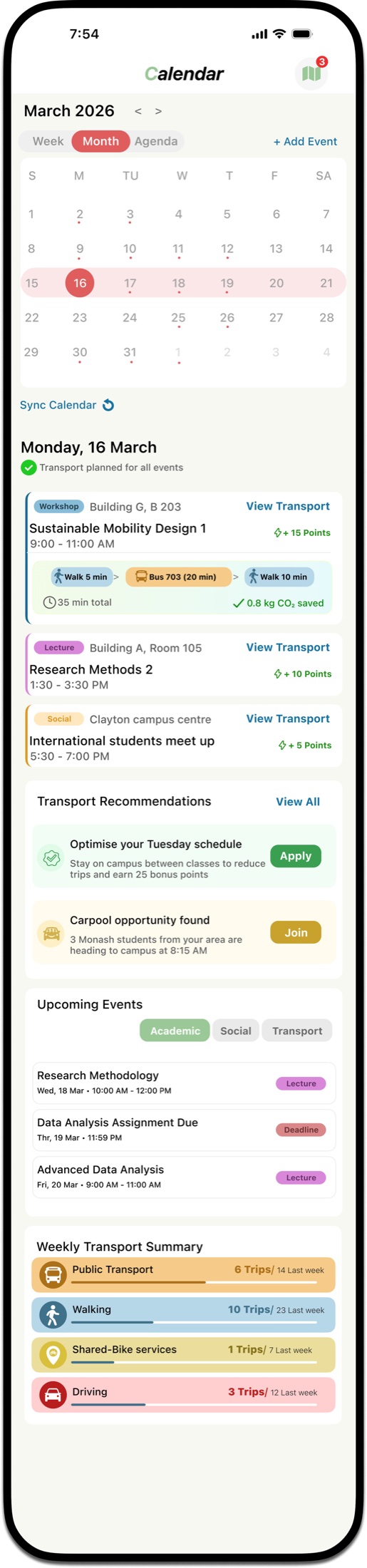
Plan around real life
Sync academic events with route options, arrival deadlines and proactive recommendations.
Compare the whole trade-off
See time, cost, carbon and reliability together instead of searching service by service.
Navigate the precinct
Unify wayfinding, live service updates and local reporting at uncertain points in the journey.
Make progress visible
Connect rewards, eco-impact and community feedback to actions people take every day.
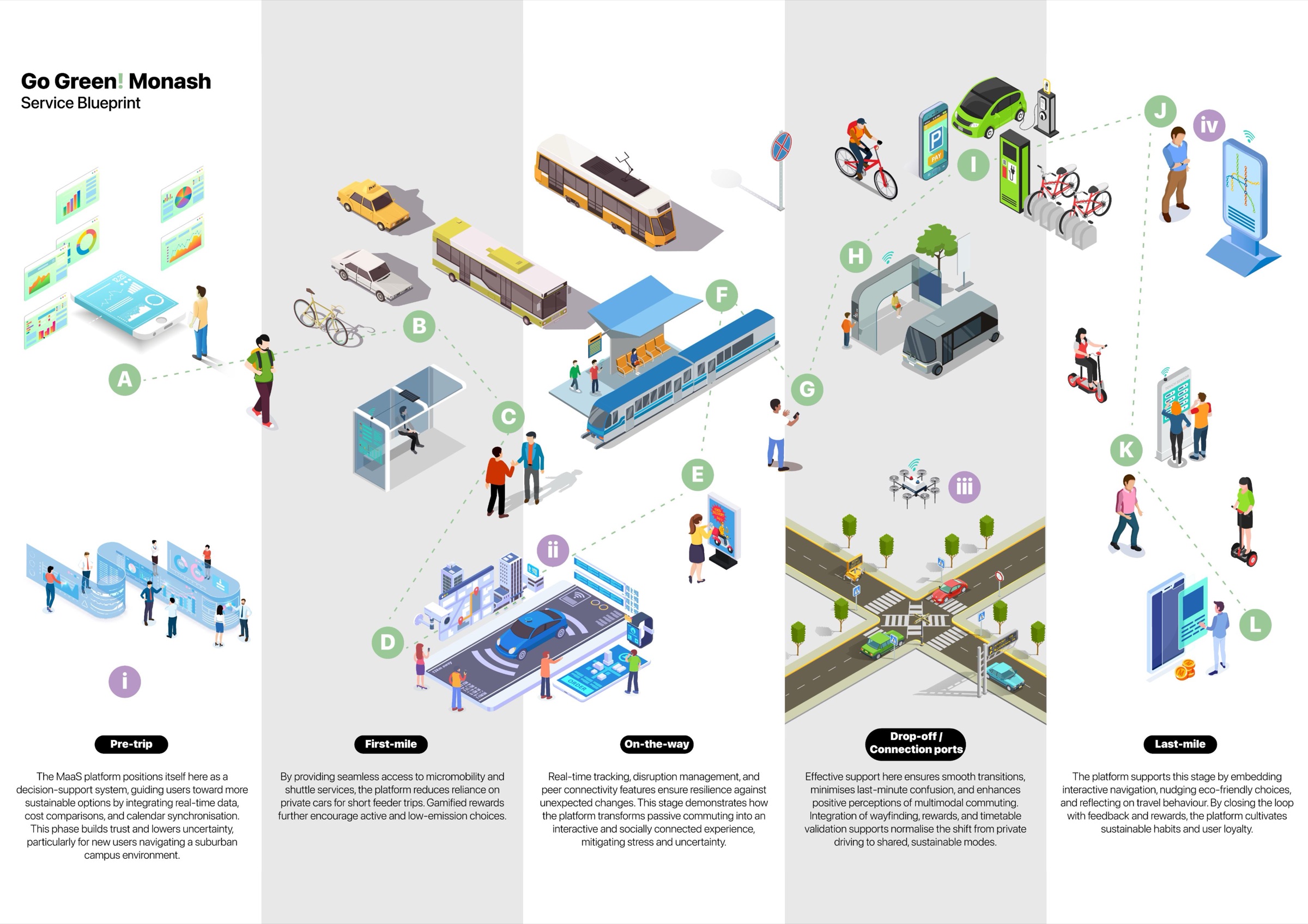
Service architecture
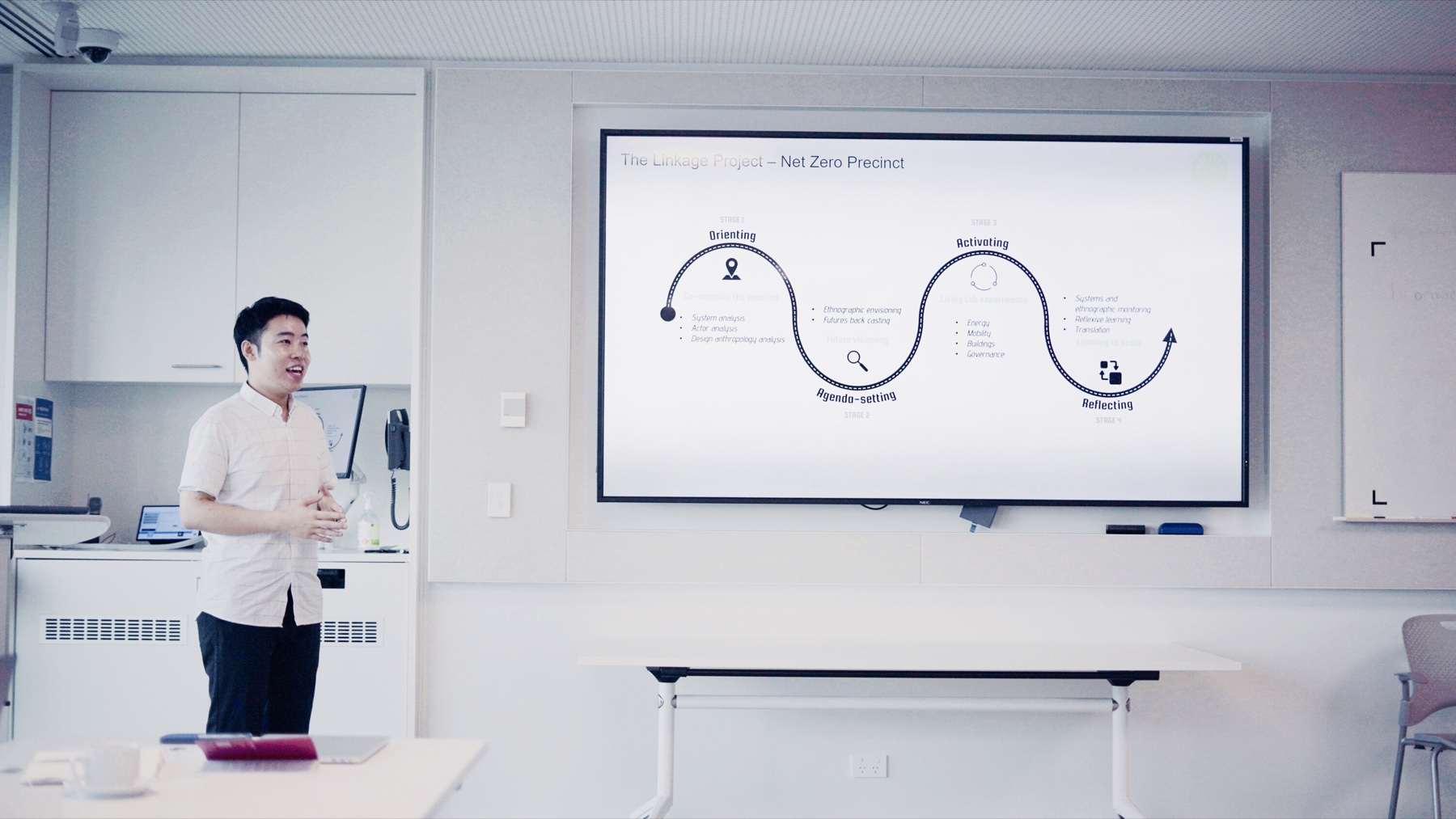
Five stages, one continuous experience: pre-trip, first-mile, on-the-way, connection ports and last-mile.
Journey logic and experience sequence
 Open front side
Touchpoints, platform functions and system requirements
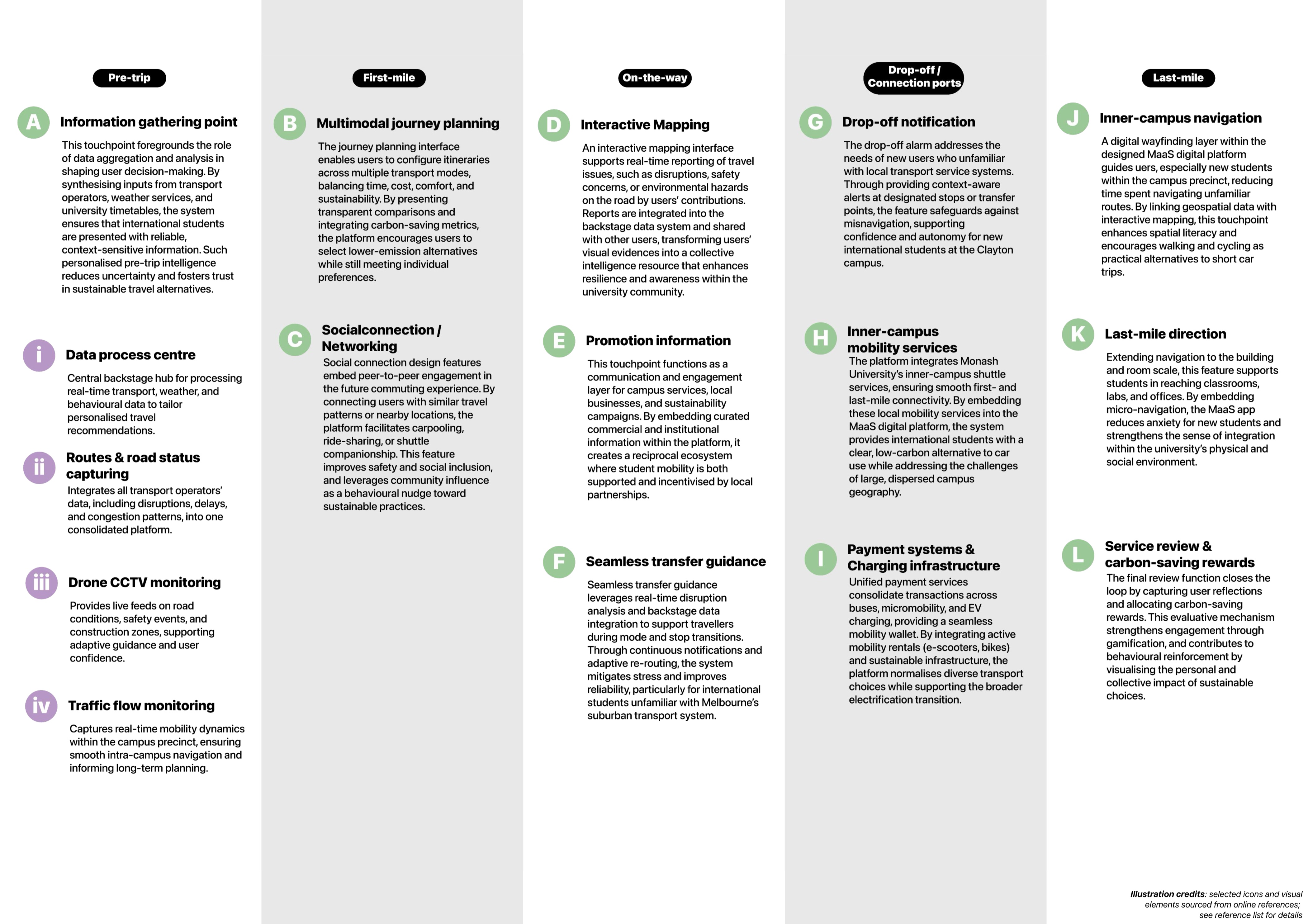 Open reverse side
The outcome is both a product concept and a way of working.
Theoretical contribution
Frames newly arrived international students as a niche population whose travel habits may be unusually open to reconfiguration.
Methodological contribution
Shows a traceable path from situated accounts to design requirements through workshops, interviews and iterative prototypes.
Practical contribution
Delivers requirements, a service blueprint and a tested interface proposition. Institutions can use each output independently.
This was a context-specific concept study with ten participants from Chinese cultural backgrounds, designed for depth rather than statistical generalisation. It does not claim production launch or measured transport-mode change.